
Real talk.
Real wood.
Humidity guides, install walkthroughs, and seasonal care for players who hang their guitars on the wall.
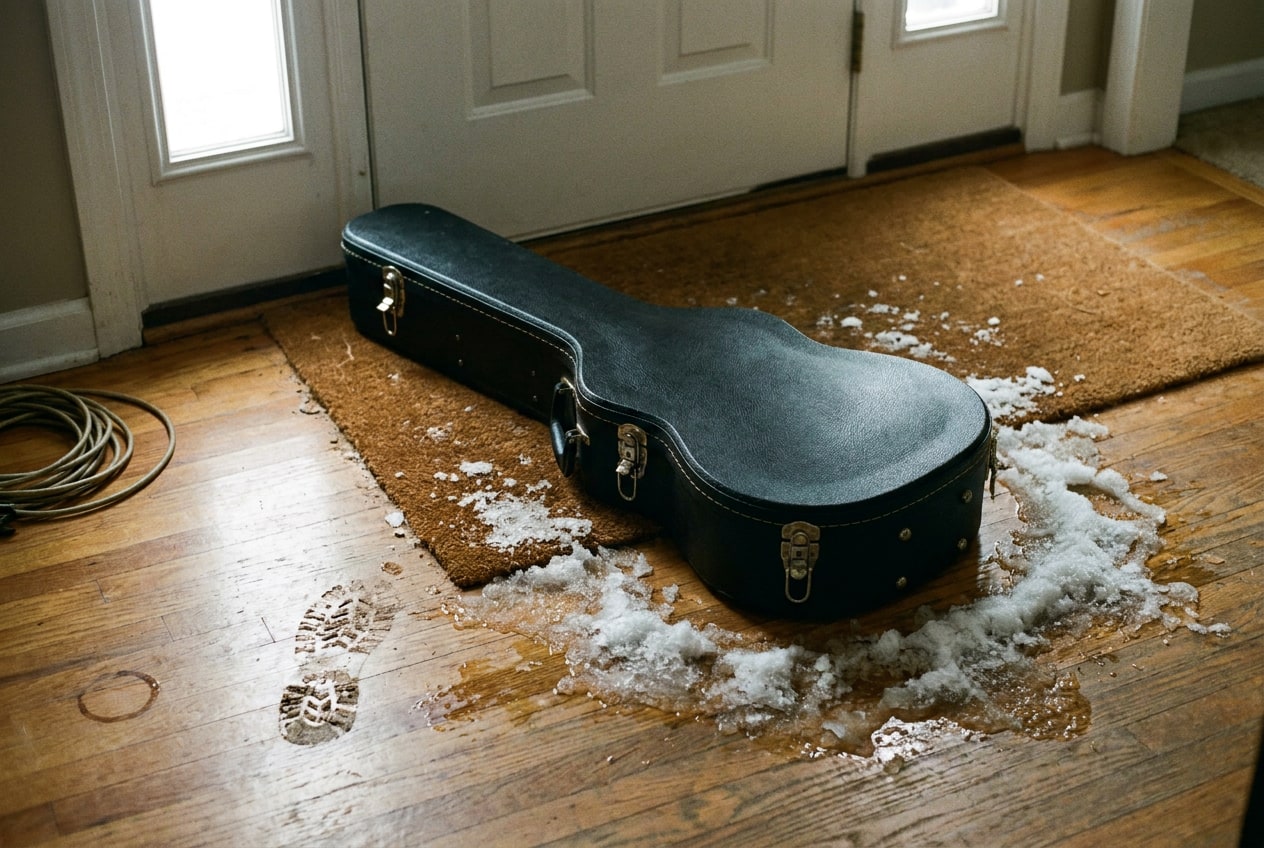
The lacquer didn't crack in the cold. It cracked warming up.
Finish checking is a web of fine cracks in a guitar's lacquer caused by fast temperature change. Here is why it happens and how to bring a cold guitar inside safely.
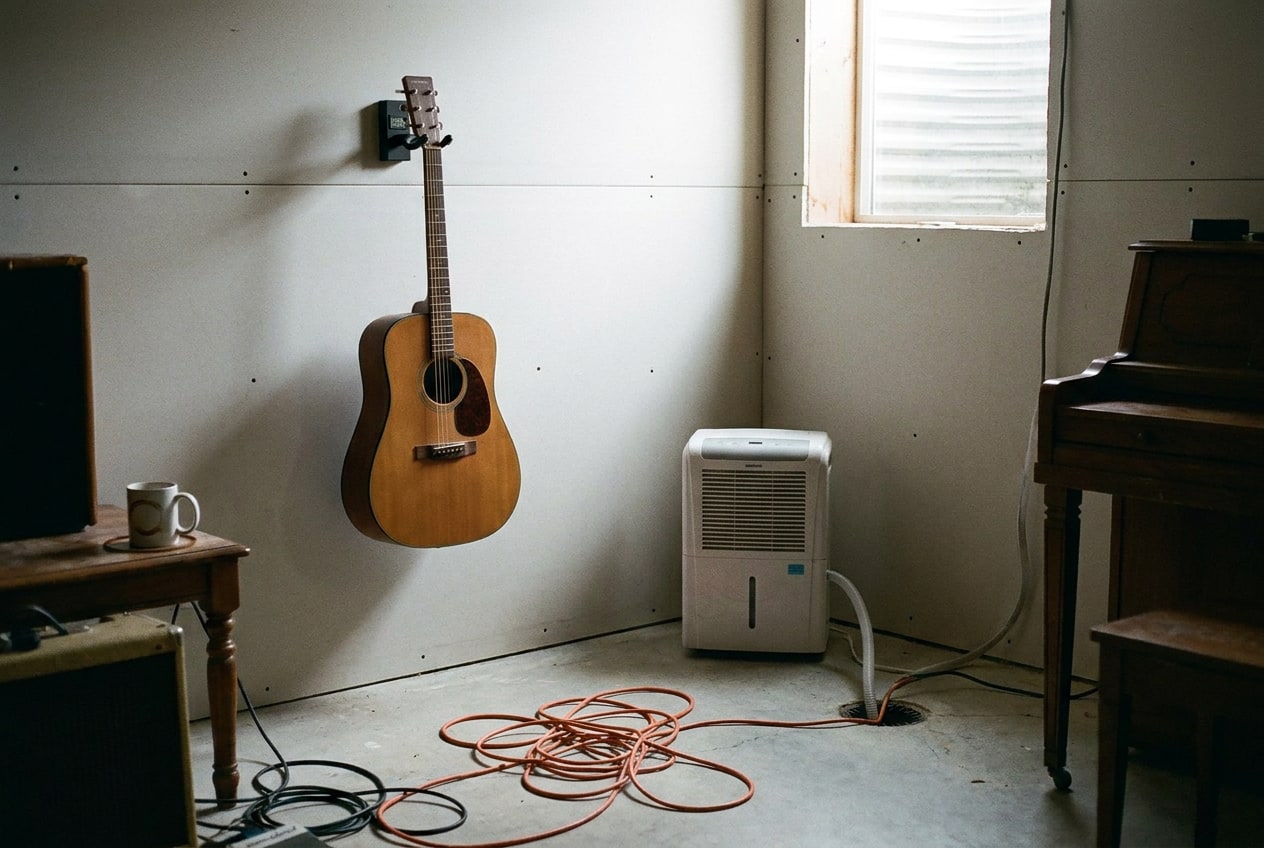
Your basement is damp in July and dry in January. Your guitar gets both.
Basements run wet in summer and dry under forced-air heat in winter. Where to hang guitars, what to run, and how to keep a basement music room near 50 percent.
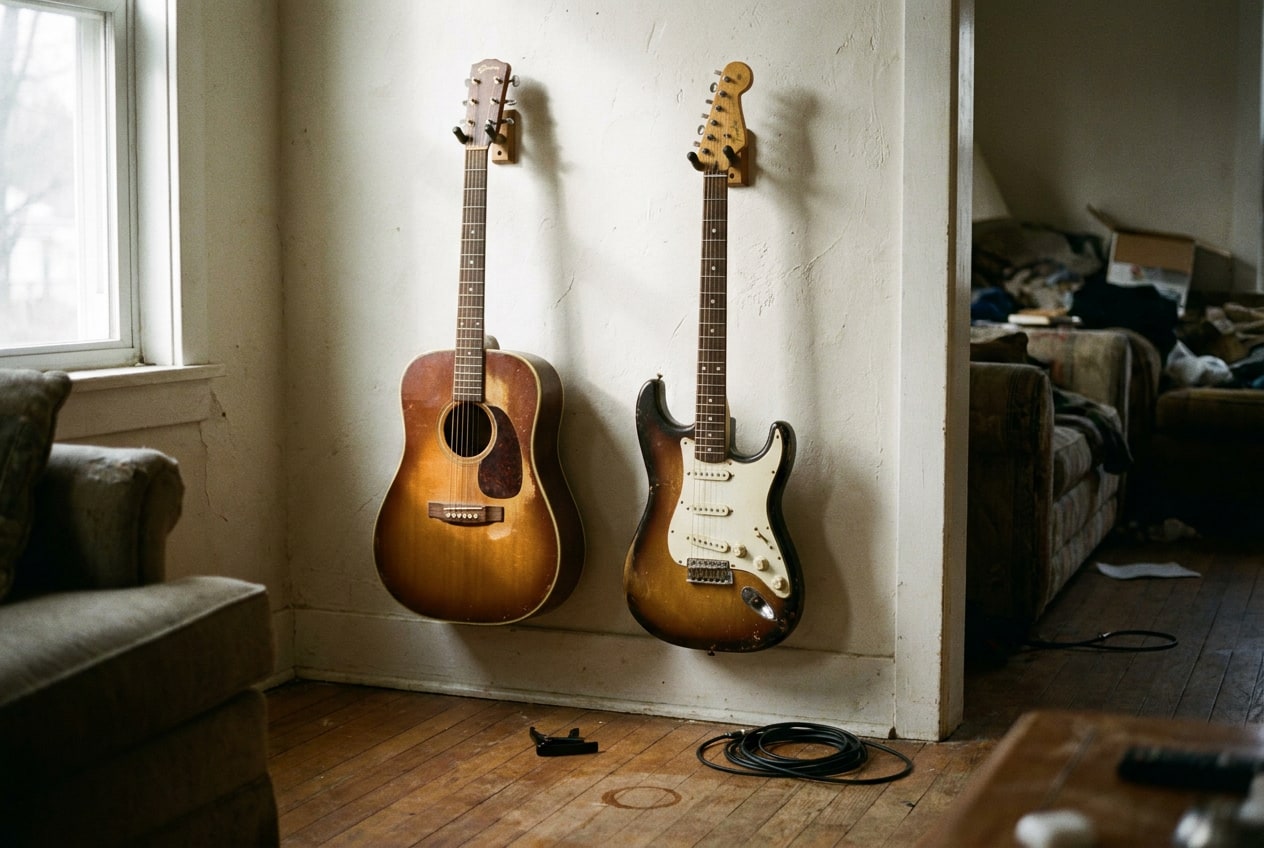
Acoustic and electric guitars want the same air. One just suffers sooner.
Both want 45 to 55 percent, but a solid top acoustic hurts first and worst. What dries, what swells, and what to do for each kind of guitar.
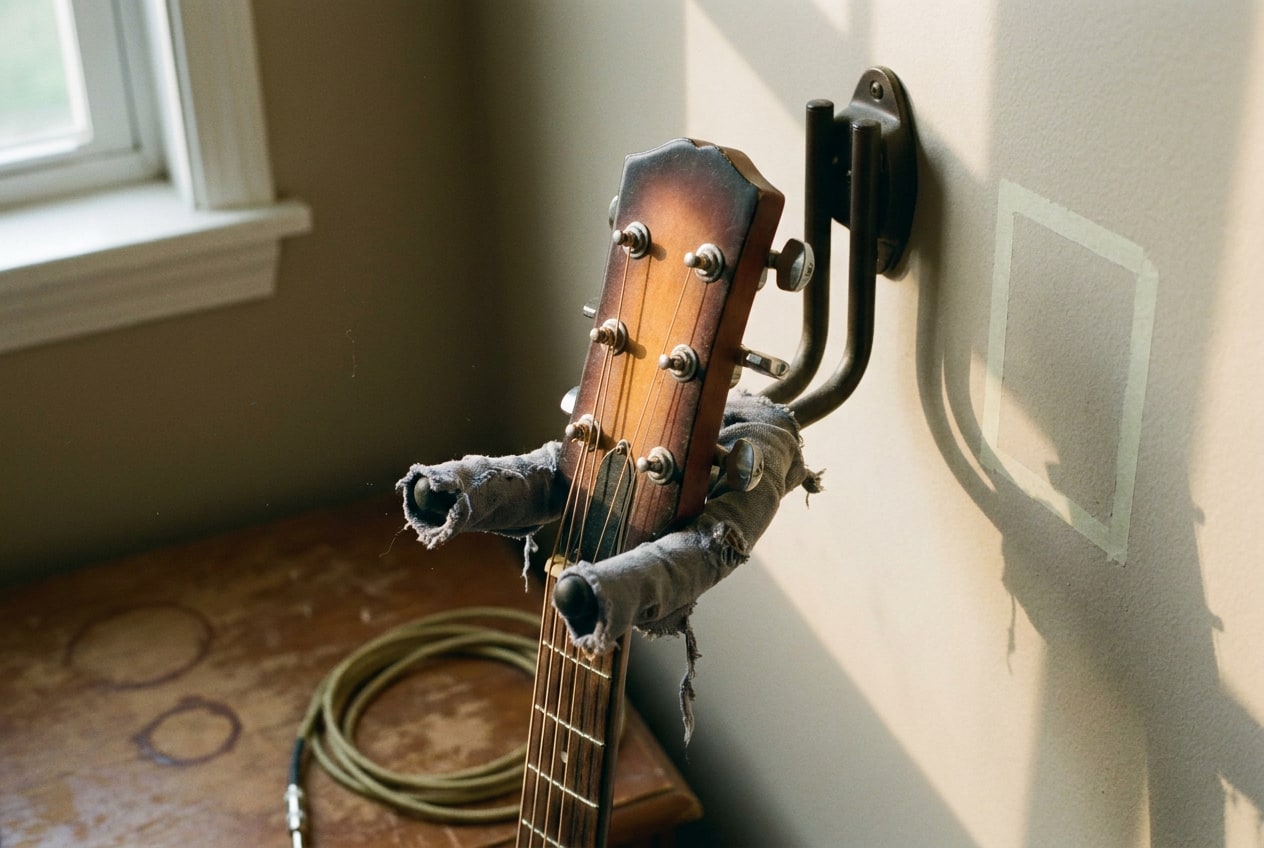
Hanging by the neck won't hurt it. The wall behind it might.
The straight answer on neck hangers: why the neck shrugs off its own weight, what actually leaves marks on a finish, and the one risk most owners never check.
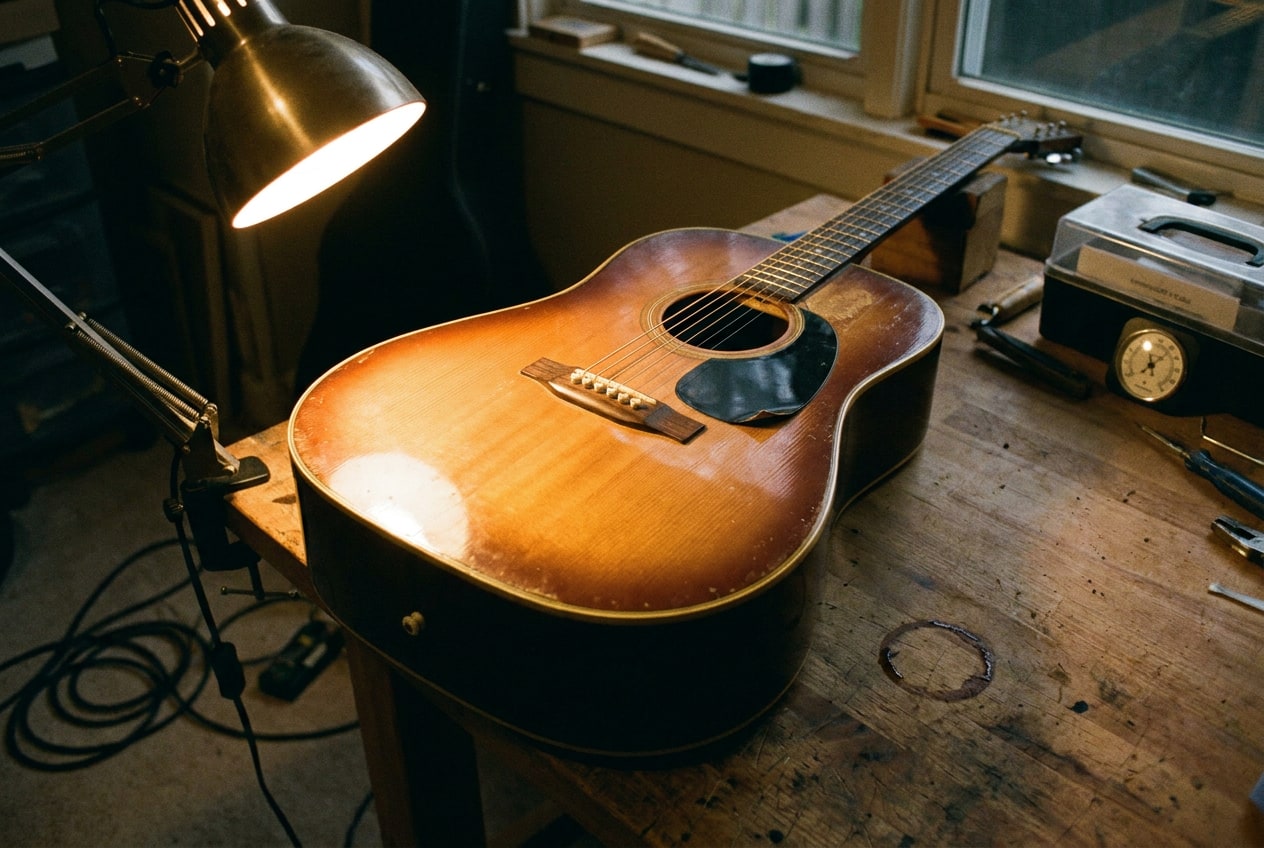
A dry guitar warns you five ways before it splits
The signs a guitar is drying out, in the order they show up: fret ends, sinking action, finish texture, lifting parts, and what the first crack looks like.
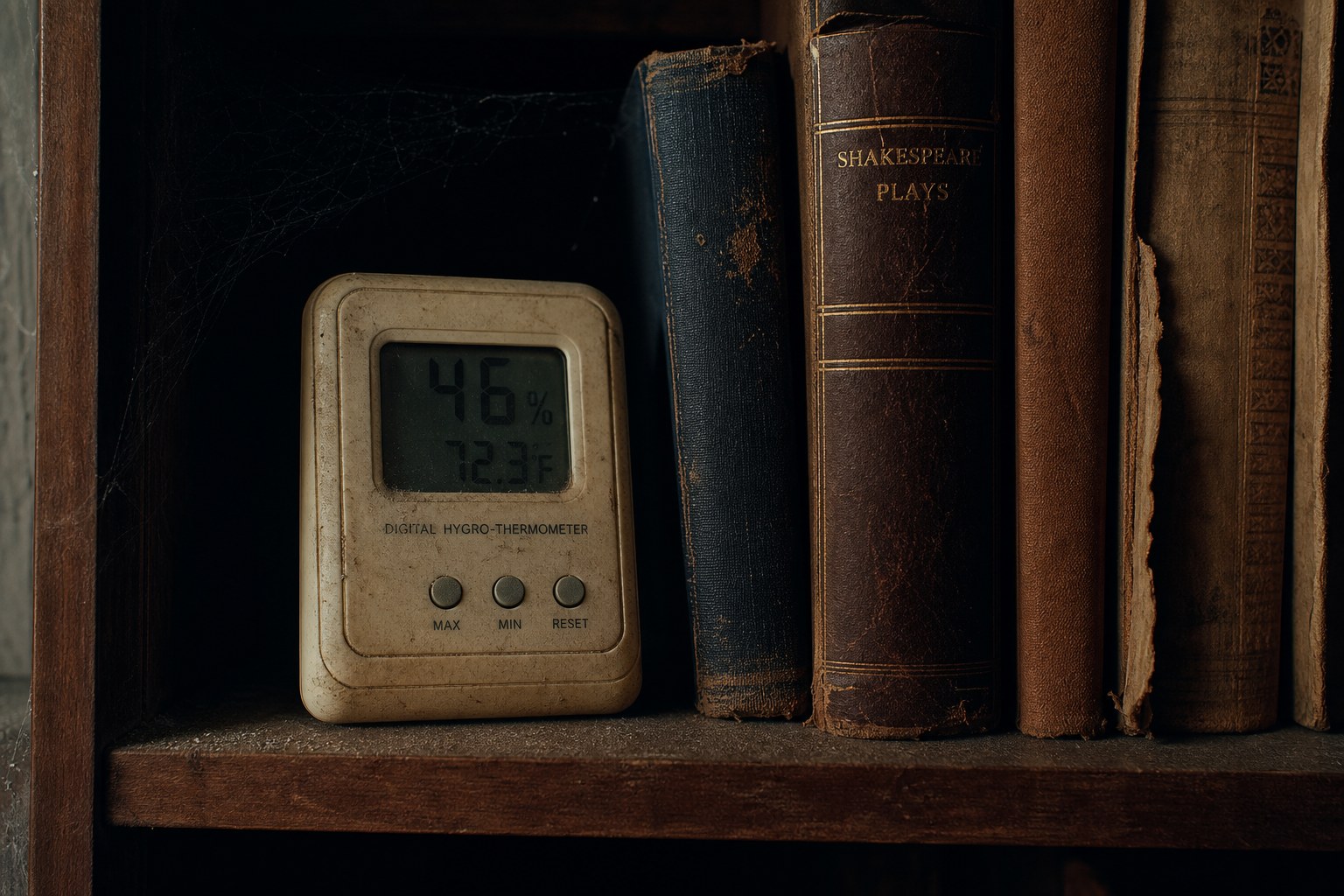
Where has this been for 40 years?
We hung guitars on walls and checked humidity somewhere else. HygroMount is the obvious idea that finally shipped.
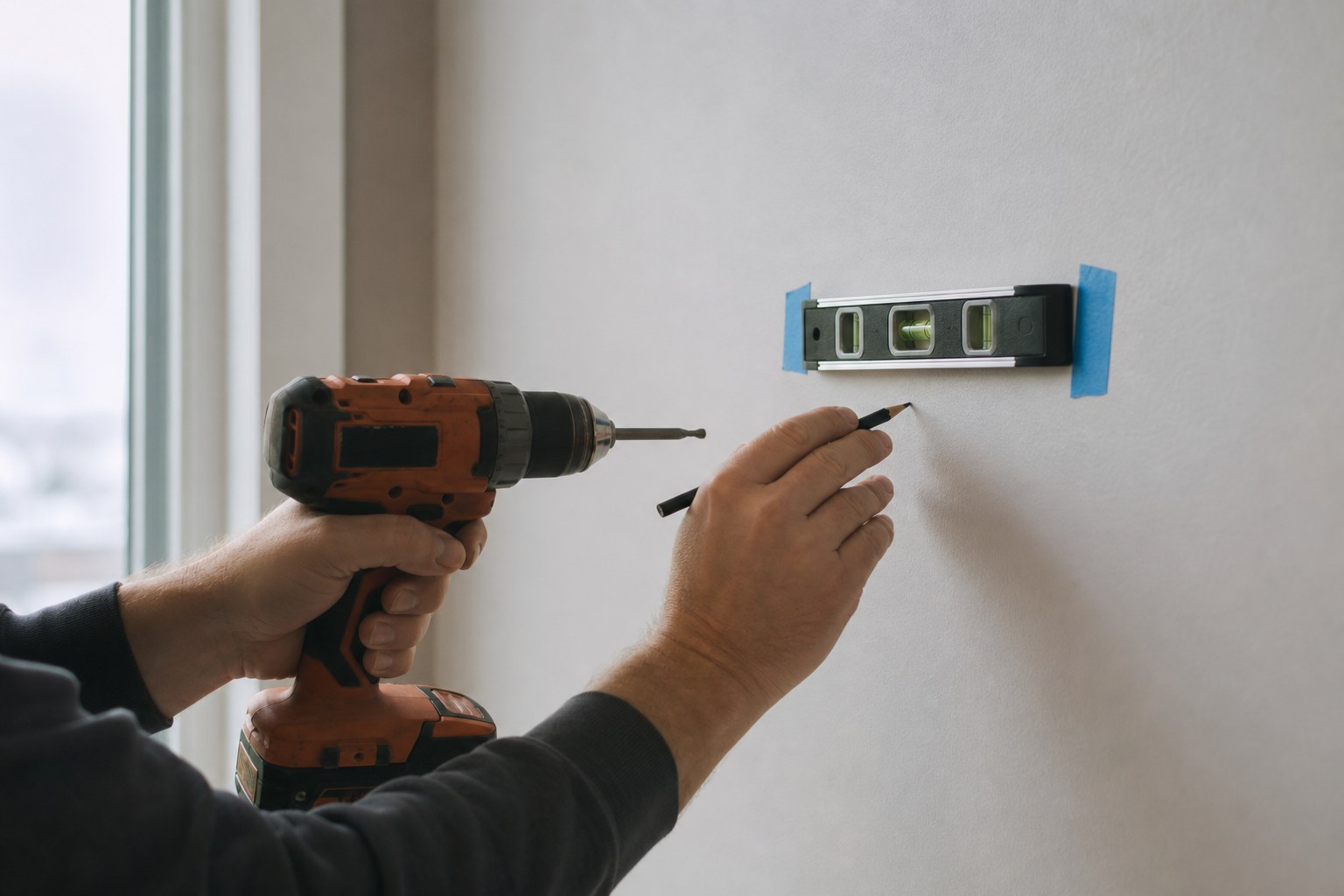
Twenty minutes. One stud. Zero regret.
Stud vs drywall, hardware included, and the mistakes that pull anchors.
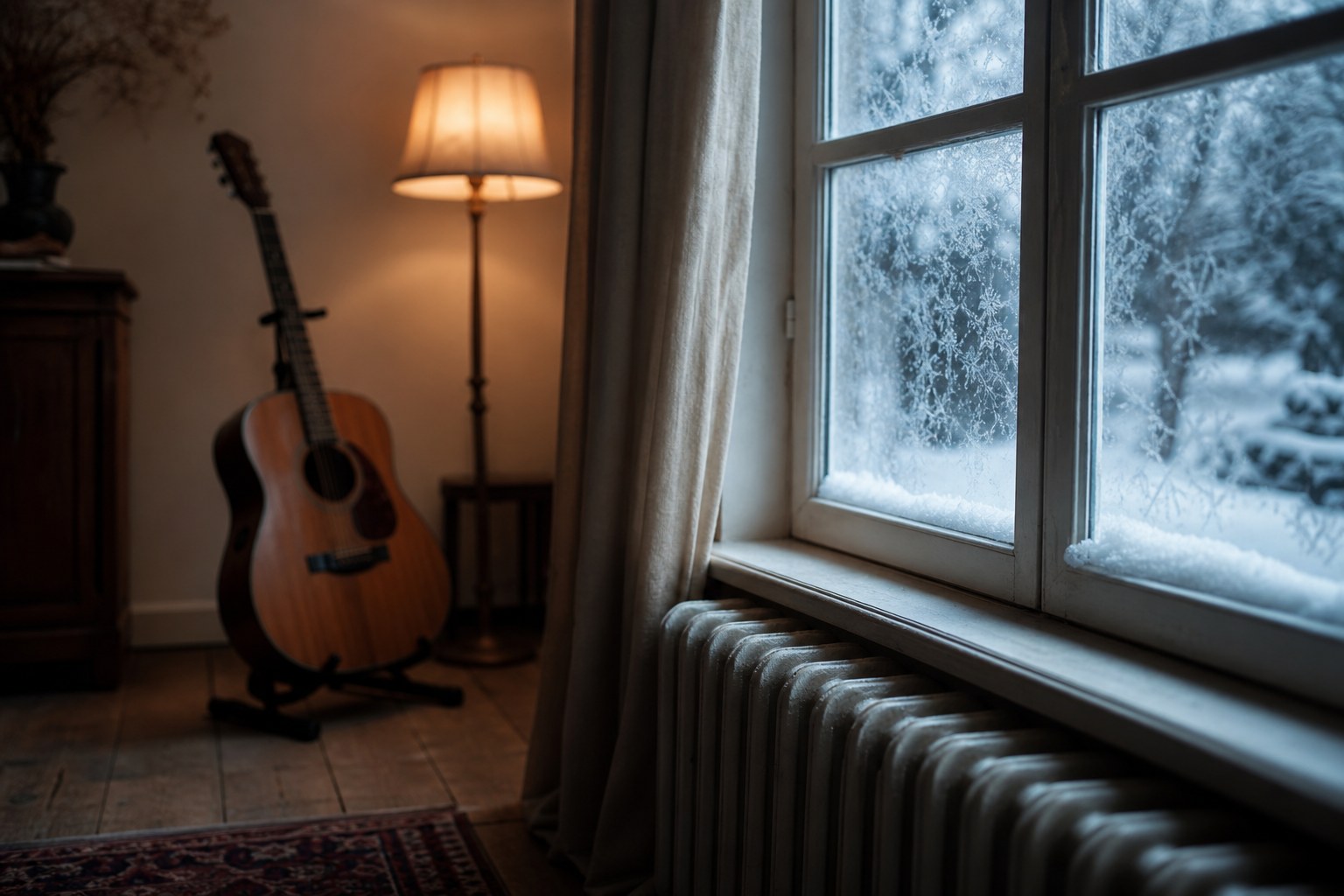
January will eat your frets before you hear a buzz.
What forced-air heat does to wall-hung guitars when RH crashes below 30%.
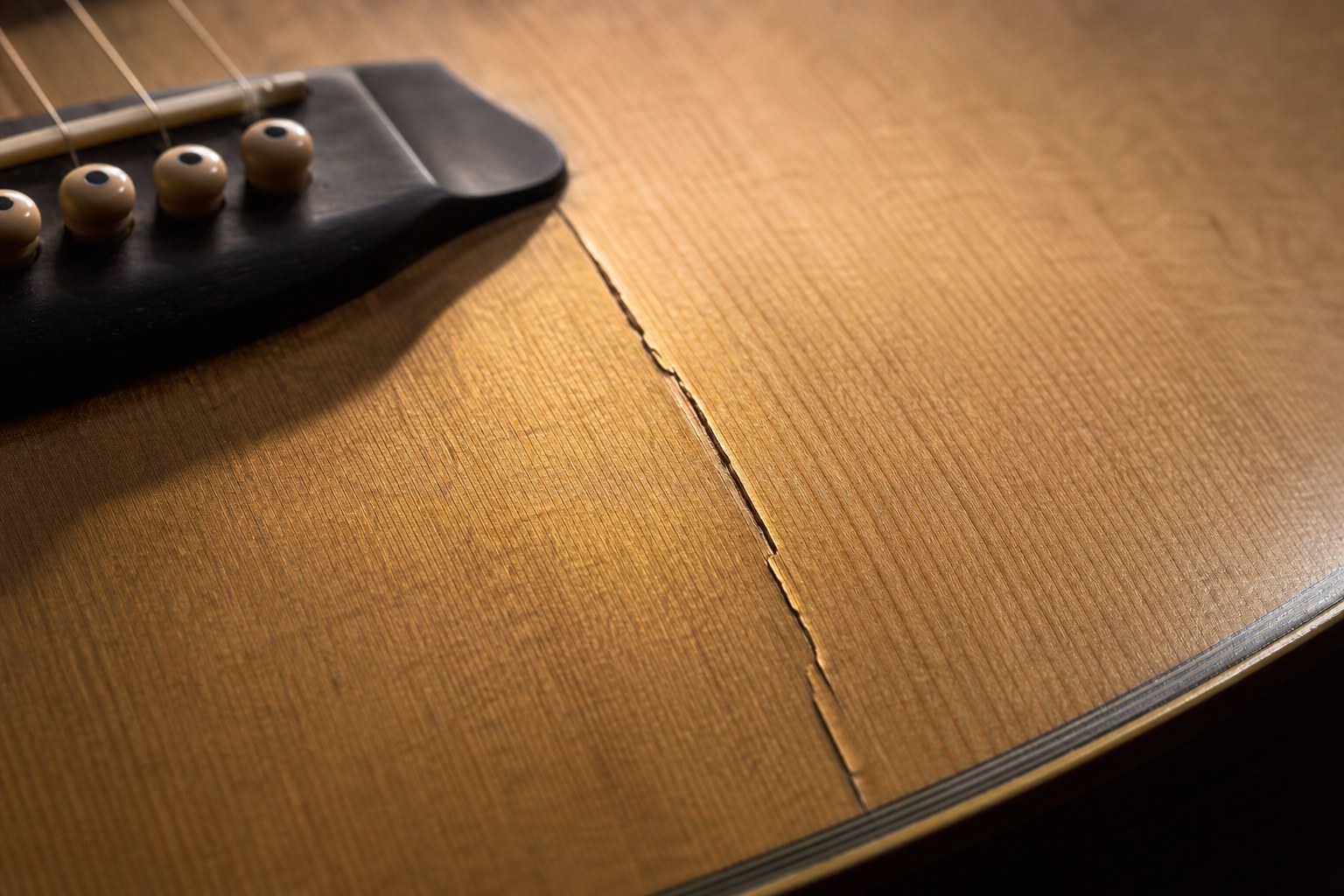
Your room says 50%. Your guitar says otherwise.
The safe zone for solid wood, and why your desk hygrometer is measuring the wrong air.
Read it. Hang it. Watch the number.
HygroMount is on Amazon now. The mount that should have existed already.
Buy HygroMount